


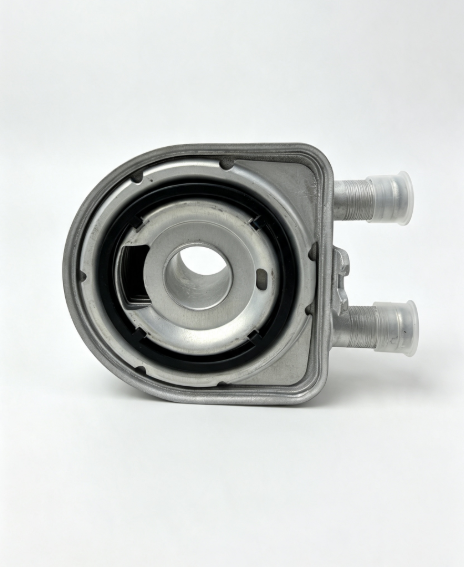

26410-2G000
KINGMAY
26410-2G000
Hyundai, Kia
Santa Fe, Tucson, Sonata, Genesis Coupe, Sorento, Sportage, Optima (K5)
2019, 2018, 2017, 2016, 2015, 2014, 2013, 2012, 2011, 2010, 2009
Cooling System
| Quantity: | |
|---|---|


Product Description
The 26410-2G000 Engine Oil Cooler Assembly is an engine lubrication and thermal-management component designed for selected Hyundai and Kia applications. Hyundai's parts catalog identifies OE number 26410-2G000 under the official name “Cooler Assembly – Engine Oil”, with Oil Cooler Assembly and Oil Filter Housing also used as common product names. The part carries Hyundai catalog code 26410B and replaces earlier OE number 26410-25402.
Installed in the engine lubrication system, the oil cooler transfers excess heat from circulating engine oil to the engine cooling circuit. By helping maintain a more stable oil temperature, it supports proper lubrication viscosity, reduces thermal stress on internal engine components, and contributes to reliable engine operation under different driving conditions.
This product is suitable as a replacement for a worn, leaking, internally damaged, or corroded engine oil cooler when OE number 26410-2G000 matches the original vehicle component.
| Specification | Details |
|---|---|
| OE / OEM Reference Number | 26410-2G000 |
| Official Hyundai Name | Cooler Assembly – Engine Oil |
| Common English Name | Engine Oil Cooler Assembly |
| Other Catalog Name | Oil Filter Housing |
| Hyundai Part Code | 26410B |
| Previous / Replaced OE Number | 26410-25402 |
| Product Category | Engine Lubrication / Cooling System |
| Component Type | Engine Oil-to-Coolant Heat Exchanger Assembly |
| Fitment Type | Direct Replacement |
| Official Catalog Item Weight | 2.20 lb / approx. 1.00 kg |
| Installation Position | Engine lubrication / oil filter area |
| Operating Media | Engine Oil + Engine Coolant |
| Condition | New Replacement Part |
Hyundai's catalog lists the 26410-2G000 at 2.20 lb (approximately 1.0 kg) and identifies it as a direct-replacement engine oil cooler assembly.
Aftermarket dimensional references for replacement units using OE number 26410-2G000 generally list dimensions of approximately:
Length: 135 mm
Width: 96 mm
Height: 50 mm
Main Center Hole: approximately 21 mm
Secondary Port/Hole Diameter: approximately 12 mm
These measurements come from aftermarket replacement-product specifications rather than Hyundai's official catalog, so actual Kingmay product dimensions should be measured before publishing them as factory specifications.
The 26410-2G000 oil cooler acts as a compact heat exchanger. Hot engine oil flows through internal passages while engine coolant circulates through separate passages, allowing excess oil heat to transfer into the cooling system.
This helps prevent engine oil from remaining at excessively high temperatures during demanding operating conditions.
The oil cooler is designed to provide a relatively large internal heat-transfer area while maintaining a compact external size, allowing it to fit directly within the engine lubrication system.
Hyundai catalogs also refer to the assembly as an Oil Filter Housing, reflecting its location and integration with the engine's oil-filter and lubrication circuit.
The mounting points and fluid passages are designed around the original 26410-2G000 application, helping provide proper alignment with the related oil passages, coolant passages, filter system, and sealing surfaces.
Replacement versions of 26410-2G000 typically use a metal heat-exchanger housing designed to withstand:
Engine operating temperature
Oil pressure
Coolant pressure
Repeated heating and cooling cycles
Engine vibration
Long-term contact with engine oil and coolant
Aftermarket specifications consistently describe the replacement unit as a metal construction.
The primary function of the 26410-2G000 Engine Oil Cooler Assembly is to regulate engine oil temperature.
Engine oil performs several important tasks inside the engine, including lubricating crankshaft bearings, connecting rod bearings, camshafts, timing components, pistons, and other moving surfaces.
During engine operation, friction and combustion heat increase the oil temperature. The engine oil cooler helps remove part of this excess heat.
Its main functions include:
Oil Temperature Regulation
Transfers excess heat away from circulating engine oil.
Lubrication Protection
Helps engine oil remain within a suitable operating-temperature range so that its viscosity and lubricating performance are maintained.
Engine Component Protection
Stable oil temperature helps protect bearings and other lubricated components against excessive thermal stress.
Support During High Engine Load
Cooling becomes particularly important during prolonged driving, high ambient temperatures, heavy acceleration, turbocharged operation, and other conditions that generate increased engine heat.
Oil Filter System Integration
The assembly works closely with the oil-filter housing area to maintain proper oil circulation through the engine lubrication system.
The oil cooler sits between two important vehicle systems:
Engine lubrication system → Engine oil
and
Engine cooling system → Coolant
The two fluids flow through separate internal passages and normally do not mix.
Heat moves from the hotter engine oil through the metal heat-exchanger walls into the coolant. The heated coolant then travels through the engine cooling system, where heat can ultimately be dissipated through the radiator.
Therefore, a healthy 26410-2G000 helps the engine maintain more stable lubrication temperatures without allowing coolant and oil to come into direct contact.
Hyundai's OE catalog lists 26410-2G000 for several applications, including:
| Make | Model | Cataloged Years |
|---|---|---|
| Hyundai | Genesis Coupe | 2012–2016 |
| Hyundai | Santa Fe | 2009–2010 |
| Hyundai | Sonata | 2005–2006 |
| Hyundai | Sonata Hybrid | 2011–2015 |
| Hyundai | Tucson | 2009–2018 |
The catalog shows DOHC MPI, GDI and TCI/MPI applications depending on model and year.
The same OE number is also found in Kia applications such as selected Optima and Sportage models; however, exact fitment depends on engine specification, production date and market. Always confirm compatibility by VIN + OE number + engine code before ordering.
Common symptoms:
Oil visible around the oil cooler housing
Oil stains underneath the vehicle
Gradual reduction in engine oil level
Oil contamination around the oil filter area
Burning-oil smell if oil contacts hot engine surfaces
Possible causes:
The sealing gasket or O-ring between the cooler and engine housing may deteriorate after repeated heat cycles. The cooler housing itself may also become damaged or distorted.
Solution:
Inspect the oil cooler body and all sealing surfaces. Replace damaged seals or the complete 26410-2G000 assembly when necessary.
Clean the mounting surface thoroughly before installation and use the correct gasket/O-ring specification.
Common symptoms:
Falling coolant level
Coolant visible around the oil cooler
Wetness around coolant connections
Engine temperature increasing
Coolant smell in the engine compartment
Possible causes:
Coolant passages, seals, fittings or the internal cooler structure may develop leakage due to age, corrosion, overheating or physical damage.
Solution:
Pressure-test the cooling system and inspect the oil cooler and connecting hoses.
Replace the cooler if the housing or heat exchanger is damaged rather than attempting an unreliable external repair.
This is one of the more serious possible oil-cooler failures.
Possible symptoms:
Milky or creamy engine oil
Oil contamination inside the coolant reservoir
Brown oily deposits in coolant
Increasing oil or coolant level without explanation
Reduced lubrication quality
Engine overheating
Possible cause:
An internal failure can allow the normally separated oil and coolant passages to communicate.
Because engine oil pressure and cooling-system pressure are different, either oil can enter the coolant circuit or coolant can enter the oil system depending on operating conditions.
Solution:
The oil cooler should be tested and replaced if an internal leak is confirmed.
After replacement:
Flush contaminated cooling-system components.
Replace contaminated engine oil and oil filter.
Refill the correct coolant.
Check for continued oil/coolant cross-contamination.
Rule out other possible causes such as a cylinder-head gasket or cylinder-head problem.
Do not continue driving for a long period with coolant-contaminated engine oil because lubrication performance can be seriously reduced.
Possible symptoms:
Poor oil circulation
Abnormal oil temperature
Oil-pressure warning
Increased engine operating temperature
Premature oil degradation
Possible causes:
Old oil, sludge, debris or internal contamination can gradually restrict the narrow passages inside an oil cooler.
Solution:
Inspect the lubrication system and replace the cooler if internal blockage cannot be reliably cleaned.
Engine oil and filter should also be replaced according to the correct service interval.
Possible symptoms:
Engine oil running hotter than normal
Oil losing viscosity more quickly
Increased thermal stress during extended driving
High oil temperature under heavy engine load
Possible causes:
Possible causes include:
Internal deposits
Restricted coolant flow
Incorrect coolant
Air inside the cooling system
Damaged heat exchanger
Cooling-system problems elsewhere in the vehicle
Solution:
Check coolant level and condition first.
Inspect the cooling circuit for restrictions and ensure the engine thermostat, water pump, radiator and related hoses operate normally.
Replace the oil cooler when its heat-exchange performance is compromised.
Oil cooler seals experience continuous:
High temperature
Cooling cycles
Engine vibration
Oil exposure
Coolant exposure
Over time, seals may harden, flatten or crack.
Solution:
Use new sealing components whenever the oil cooler is removed or replaced.
Do not reuse a visibly flattened, hardened or damaged gasket.
For professional replacement of the 26410-2G000:
Confirm the vehicle VIN, engine code and original OE number.
Allow the engine to cool completely.
Drain engine coolant as required.
Remove the engine oil filter and related components.
Disconnect the oil cooler coolant connections.
Remove the original oil cooler assembly.
Clean the mounting and sealing surfaces.
Install the replacement cooler with new seals/gaskets.
Tighten mounting hardware to the vehicle manufacturer's specified torque.
Install the correct engine oil filter.
Refill the specified engine oil and coolant.
Bleed air from the cooling system where required.
Start the engine and inspect carefully for oil or coolant leakage.
Recheck engine oil and coolant levels after the engine reaches operating temperature.
26410-2G000 should not be selected by vehicle model alone.
Vehicle fitment can change according to:
Model year
Production date
Engine displacement
Naturally aspirated or turbocharged engine
Hybrid / gasoline configuration
Vehicle market
VIN
The safest purchasing method is to compare the original part number and confirm OE 26410-2G000 against the vehicle VIN before ordering.
The 26410-2G000 Engine Oil Cooler Assembly is an important part of the engine's lubrication and cooling system. By transferring heat away from engine oil, it helps maintain stable oil temperature, proper lubrication performance and reliable engine operation.
A worn or leaking oil cooler can cause engine oil loss, coolant loss, overheating or even oil/coolant contamination, so timely replacement is important when leakage or internal failure is detected.
Recommended Listing Name:
26410-2G000 Engine Oil Cooler Assembly Oil Filter Housing for Hyundai Kia


