


27300-3F100
KINGMAY
27300-3F100
Hyundai, Kia
Santa Fe, Tucson, Sonata, Genesis Coupe, Sorento, Optima (K5)
2017, 2016, 2015, 2014, 2013, 2012, 2011, 2010, 2009
Electrical System
Ignition Coil
| Quantity: | |
|---|---|


Product Description
The 27300-3F100 Ignition Coil Assembly is a direct-replacement ignition system component designed for selected Hyundai and Kia gasoline-engine applications. Its primary function is to transform the vehicle's low-voltage electrical supply into the high voltage required by the spark plug to ignite the air-fuel mixture inside the combustion chamber. DENSO explains that an ignition coil uses primary and secondary windings and electromagnetic induction to generate the high voltage required for spark ignition.
Designed as an OE-style replacement, this ignition coil is suitable for engine maintenance, professional repair, aftermarket replacement, automotive parts distributors, wholesalers, and international B2B procurement. Hyundai's parts catalog identifies 27300-3F100 as “Coil Assembly-Ignition”, while Kia catalogs also describe it as a Direct Ignition Coil / Coil Assembly Ignition. The part supersedes 27300-2G000.
For vehicles using the corresponding OE number, the direct-fit design helps reduce unnecessary modification during installation. Vehicle model, production year, engine displacement and VIN should always be checked before ordering to ensure correct fitment.
| Specification | Details |
|---|---|
| Product Type | Ignition Coil Assembly |
| Official Part Description | Coil Assembly-Ignition |
| OE / Manufacturer Part Number | 27300-3F100 |
| Replacement OE Number | 27300-2G000 |
| Other Common Reference | 273003F100 |
| Ignition Type | Direct Ignition Coil |
| Installation Type | Direct Replacement |
| Condition | 100% New |
| Application | Gasoline Engine Ignition System |
| Engine Applications | Selected 2.0L / 2.4L I4 and 4.6L / 5.0L V8 applications |
| OEM Reference Weight | Approx. 0.80 lb / 0.36 kg |
| Installation Position | Engine / Spark Plug Ignition System |
| Housing | Heat-resistant molded insulating housing |
| Electrical Connection | Vehicle-specific plug-in connector |
| Sales Model | Wholesale / B2B / Bulk Orders |
| Packaging | Neutral Packaging / Customized Packaging |
| Order Options | Mixed Batch / Shared Container / Full Container |
| Sample Shipping | DHL / UPS available |
| Main Export Shipping | Sea Freight / Air Freight / Express |
The OEM reference weight and direct-replacement designation are listed in Hyundai's parts catalog. Engine applications including 2.0L, 2.4L, 4.6L and 5.0L configurations are also shown in Kia OEM parts listings.
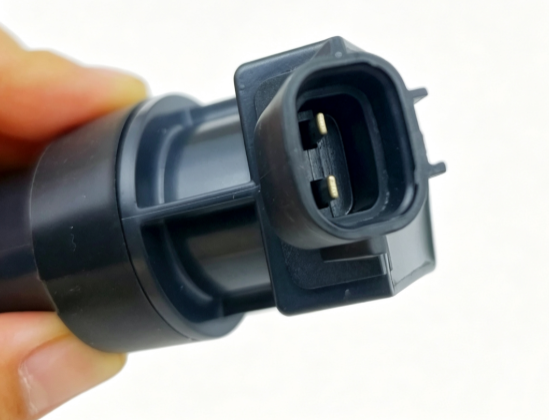
The ignition coil is responsible for supplying the high voltage required by the spark plug. Stable coil output helps the spark plug ignite the air-fuel mixture consistently, supporting smooth engine combustion, stable acceleration and normal engine operation.
The unit uses an OE-style installation configuration and is designed to replace the corresponding original ignition coil without unnecessary structural modification. eBay listings for 27300-3F100 commonly identify the product as a Direct Replacement component.
The connector and mounting design are made for corresponding Hyundai and Kia applications, helping provide secure electrical contact and correct installation when the OE number and vehicle application match.
Ignition coils operate continuously in a high-temperature engine environment. DENSO notes that repeated heat cycles can degrade internal insulation and electrical performance over time, making thermal durability an important consideration for ignition components.
OE catalogs show this part number across several Hyundai and Kia applications, including selected 2.0L and 2.4L inline-four engines, as well as 4.6L and 5.0L V8 applications.
The vehicle's electrical system normally provides relatively low voltage, which is not sufficient on its own to generate the spark required inside the combustion chamber.
The ignition coil works as an electrical transformer. Through electromagnetic induction, it greatly increases the voltage and delivers the resulting high-voltage electrical energy to the spark plug. The spark plug then ignites the compressed air-fuel mixture inside the cylinder.
A properly functioning ignition coil therefore contributes directly to:
Consistent spark generation
Smooth engine idle
Stable acceleration
Correct combustion
Reliable engine starting
Reduced ignition misfire
Normal engine power delivery
Consistent drivability
A defective ignition coil can produce a range of drivability problems. DENSO identifies common coil-failure symptoms such as misfires, hesitation during acceleration, stalling, difficult starting and poor drivability.
When diagnostic testing confirms that the original ignition coil is faulty, replacing it with the correct 27300-3F100 unit may help address the following symptoms.
Possible symptom:
The engine shakes, runs unevenly, misfires under load or produces an abnormal exhaust rhythm.
Possible cause:
The aging coil may no longer provide consistent voltage to the spark plug.
Solution:
Inspect the spark plug, wiring, connector and ignition coil. If the ignition coil is confirmed defective, replace it with the correct OE-matched unit.
Possible symptom:
The vehicle feels weak during acceleration, hesitates when the accelerator is pressed or shows intermittent power loss.
Possible cause:
Weak or inconsistent spark output can result in incomplete or unstable combustion.
Solution:
After confirming that the fault originates from the ignition coil rather than the fuel, sensor or mechanical system, replacing the damaged coil can restore normal spark delivery and may improve acceleration response and engine power.
DENSO specifically lists hesitation during acceleration and engine misfire among typical signs of ignition-coil problems.
Possible symptom:
The engine vibrates excessively when stopped or the idle speed becomes unstable.
Possible cause:
One cylinder may not be receiving consistent ignition energy.
Solution:
Check fault codes and inspect the spark plug and ignition coil for the affected cylinder. Replace the faulty coil if testing confirms ignition-coil failure.
Possible symptom:
The engine cranks normally but takes longer than usual to start.
Possible cause:
Insufficient ignition energy may prevent reliable combustion during starting.
Solution:
Inspect the battery, spark plugs and ignition system first. Replace the coil when diagnosis confirms defective coil output.
Possible symptom:
The Check Engine warning light appears together with misfire, vibration or reduced engine performance.
Solution:
Use an OBD diagnostic scanner to identify the affected cylinder or ignition-related fault. The ignition coil should not be replaced solely because the warning light is illuminated; the coil, spark plug, connector and wiring should be checked before replacement. DENSO recommends visual inspection for cracks, carbon tracking, worn connections, contamination and other ignition-system issues during diagnosis.
Continuing to operate an engine with a serious ignition misfire can negatively affect drivability and fuel efficiency. Research on engine misfire also links misfire conditions with power loss and increased unburned hydrocarbon emissions.
Replacing a confirmed defective ignition coil can help restore proper spark delivery and may improve:
Engine Power → Acceleration Response → Idle Stability → Starting Performance → Combustion Consistency
However, similar symptoms can also be caused by worn spark plugs, fuel injectors, wiring, sensors, compression problems or other engine faults. Professional diagnosis is recommended before replacement.
Installation should preferably be carried out by a qualified technician.
Step 1 – Switch Off the Engine
Allow the engine to cool completely and disconnect the negative battery terminal where required by the vehicle service procedure.
Step 2 – Locate the Ignition Coil
Remove the engine cover if necessary and locate the ignition coil above the corresponding spark plug.
Step 3 – Disconnect the Electrical Connector
Release the connector locking tab carefully. Avoid pulling directly on the wiring.
Step 4 – Remove the Retaining Bolt
Remove the coil mounting bolt or fastener and gently pull the old ignition coil upward.
Step 5 – Inspect the Spark Plug Area
Check for oil, water, corrosion, carbon tracking or damaged spark plugs before installing the replacement coil. DENSO notes that contamination, worn connectors and mechanical damage should be checked when diagnosing ignition-coil problems.
Step 6 – Install the New Coil
Insert the replacement unit securely over the spark plug and reinstall the mounting fastener according to the vehicle manufacturer's service specifications.
Step 7 – Reconnect and Test
Reconnect the electrical connector and start the engine. Clear applicable fault codes and confirm that idle and acceleration have returned to normal.
For better long-term reliability:
Inspect spark plugs before installing the new ignition coil.
Replace excessively worn or incorrectly gapped spark plugs.
Do not install a new coil into a spark-plug well contaminated with oil or water.
Check the electrical connector for corrosion or loose terminals.
Make sure the coil boot is correctly positioned over the spark plug.
Do not force the electrical connector during installation.
Confirm the OE number before installation.
For large wholesale orders, test sample units before mass installation.
DENSO notes that incorrect alignment between an ignition coil and spark plug can cause damage, reinforcing the importance of correct installation.
27300-3F100 is used on selected Hyundai and Kia vehicles rather than every vehicle within a particular year range. OEM parts catalogs show applications including Hyundai Genesis, Sonata, Tucson, Santa Fe and related models, as well as Kia Forte, Optima, Sorento, Sportage, Borrego and K900 applications depending on engine and production year.
For eBay and independent-store listings, we recommend displaying:
“Please confirm OE number 27300-3F100 / 27300-2G000, vehicle model, production year, engine displacement and VIN before ordering.”
This helps reduce incorrect orders and fitment-related returns.
Every ignition coil is packed to help protect the electrical connector, coil body and mounting section during storage and international transportation.
Packaging options include:
Neutral Packaging – suitable for distributors using their own local brand.
Customized Packaging – customer logo, label, barcode and packaging design can be arranged according to order requirements.
KINGMAY Packaging – available for KINGMAY branded distribution.
Individual Protective Packing – each unit is individually protected before carton packing.
Export Carton Packing – reinforced outer cartons for international transportation.
Bulk / Pallet Packing – available for larger wholesale quantities.
Products are supplied with the packaging properly sealed before shipment to reduce the risk of dust, moisture or transportation damage.
This product is suitable for automotive parts importers, distributors, wholesalers, repair-shop suppliers and regional aftermarket dealers.
Available purchasing solutions include:
Wholesale orders
Mixed-model orders
Mixed batches
Shared-container shipments
Full-container orders
Single-container MOQ available according to quotation
Sample orders before bulk purchasing
OEM / ODM cooperation
Private-label packaging
Neutral packaging
Long-term distributor cooperation
For customers purchasing multiple Hyundai and Kia spare-part numbers, different products can be combined into the same shipment to help optimize container space and overall logistics costs.
Flexible international logistics solutions are available according to quantity, destination and delivery requirements.
Sea Freight:
Shipping can be arranged from Guangzhou / Yiwu to major overseas markets.
For reference:
Iraq: approximately 25–30 days by sea
Saudi Arabia: approximately 25–30 days by sea
Turkey: approximately 25–30 days by sea
Actual transit time may vary according to destination port, shipping line, customs clearance and sailing schedule.
Urgent Samples:
DHL / UPS express shipping is supported for urgent samples and small-volume orders.
Bulk Orders:
Sea freight is recommended for larger quantities to reduce unit transportation cost.
Shipping Options:
Mixed batches / shared container
LCL shipment
FCL shipment
Air freight
DHL / UPS express
FOB / CIF arrangements according to customer requirements
Before shipment, products can be checked for:
Product appearance
Connector condition
Housing condition
OE number
Quantity
Packaging
Carton sealing
Customer labeling requirements
For customized orders, packaging information should be confirmed before mass packing to ensure that the final shipment meets distributor requirements.
KINGMAY provides B2B customers with continued after-sales support for product identification, fitment confirmation and order-related issues.
Support includes:
24-month product warranty
OE number confirmation before ordering
Vehicle application checking
Product photos and packing confirmation
Pre-shipment inspection
After-sales technical communication
Support for damaged or incorrect shipment verification
Long-term distributor and wholesale cooperation
If a fitment question occurs, customers can provide the VIN, OE number, vehicle model, year and engine displacement so that the correct application can be checked before the next order.
A: Yes, if the abnormal power loss is caused by a defective ignition coil. A weak ignition coil can lead to misfire, hesitation and unstable combustion. Replacing the faulty unit can restore normal spark delivery and improve acceleration and engine operation. However, power loss can also be caused by spark plugs, injectors, sensors, fuel-system issues or mechanical problems, so diagnosis is recommended before replacement.
A: If the shaking is caused by an ignition-coil-related cylinder misfire, replacing the faulty coil may restore smoother idle. The spark plug and wiring should also be inspected.
A: Yes. OEM and eBay listings identify 27300-3F100 as a direct-replacement ignition coil for its corresponding applications.
A: The Hyundai and Kia parts catalogs show that 27300-3F100 replaces 27300-2G000.
A: Yes. Customized labels and packaging can be arranged for wholesale orders. Neutral packaging is also available for customers selling under their own aftermarket brand.
A: Yes. Mixed batches and shared-container shipments are supported, making them suitable for importers purchasing multiple Hyundai and Kia spare-part numbers.


