


28240-2G411
KINGMAY
28240-2G411
Hyundai, Kia
Santa Fe, Sportage, Optima (K5)
2016, 2015, 2014, 2013, 2012, 2011, 2010
Engine System
Turbocharger
| Quantity: | |
|---|---|


Product Description
The 28240-2G411 Turbocharger Oil Feed Pipe is an engine lubrication component designed to deliver pressurized engine oil to the turbocharger on selected Hyundai and Kia 2.0L Theta II turbocharged gasoline engines.
Hyundai catalogs the component as Pipe-Oil Feed / Oil Feed Tube, while Kia identifies it as Pipe-Oil Feed / Oil Inlet Tube with part code 28240B. The updated 28240-2G411 supersedes earlier OE numbers 28240-2G401 and 28240-2G410.
The oil feed pipe connects the engine lubrication circuit with the turbocharger center housing. While the engine is running, pressurized engine oil flows through this pipe to lubricate and cool the turbocharger shaft and bearing assembly.
Because a turbocharger can rotate at extremely high speeds and operates close to the exhaust system, reliable oil delivery is essential. A restricted, leaking, damaged, or incorrectly installed oil feed pipe can quickly affect turbocharger lubrication and may eventually result in turbocharger failure.
| Specification | Details |
|---|---|
| OE Reference Number | 28240-2G411 / 282402G411 |
| Official Hyundai Name | Pipe-Oil Feed |
| Hyundai Description | Oil Feed Tube |
| Kia Description | Oil Inlet Tube / Oil Pipe |
| Part Code | 28240B |
| Previous OE Numbers | 28240-2G401 / 28240-2G410 |
| Product Type | Turbocharger Oil Feed Pipe |
| Product Category | Turbocharger Lubrication System |
| Engine Family | Theta II |
| Common Engine Displacement | 2.0L / 1998 cc |
| Engine Configuration | L4 DOHC Turbocharged Gasoline |
| Induction Type | Turbocharged |
| Fuel System | TCI / GDI Applications |
| Primary Function | Deliver Pressurized Engine Oil to Turbocharger |
| Installation Location | Engine to Turbocharger Oil Inlet |
| Kia Catalog Weight | 0.70 lb / approx. 0.32 kg |
| Hyundai Catalog Weight | 2.20 lb / approx. 1.00 kg |
| Fitment Type | Direct OE-Reference Replacement |
| Condition | New Replacement Part |
| KINGMAY Warranty | 24 Months |
| Shipping Origin | Guangzhou, China |
Kia's catalog lists 28240-2G411 with an item weight of 0.70 lb, while a Hyundai catalog source lists 2.20 lb. Because these catalog weights differ significantly, they should be treated as catalog/shipping weights rather than verified net product weight. The actual KINGMAY product should be weighed before publishing a precise net weight.
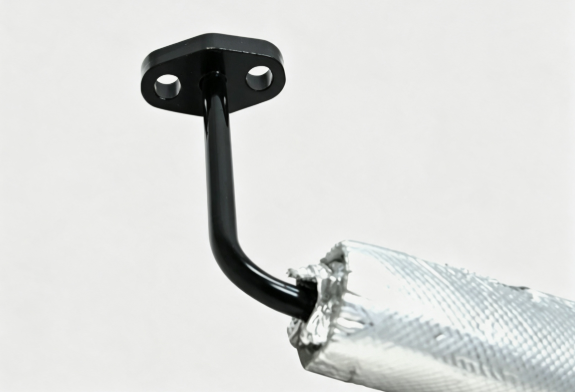
This swan-shaped component is the oil feed pipe
The primary purpose of the 28240-2G411 is to provide a continuous oil supply from the engine lubrication system to the turbocharger.
Correct oil delivery helps maintain an oil film between high-speed turbocharger bearing surfaces, reducing direct metal-to-metal contact.
Kia's OE catalog lists 28240-2G411 for 2.0L Theta II applications including the Optima and Sportage. Hyundai/Kia aftermarket fitment references also associate the pipe with selected 2.0L turbocharged Sonata, Santa Fe Sport, Optima and Sportage models.
The 28240-2G411 supersedes:
28240-2G401
28240-2G410
This makes it an updated reference for compatible applications originally equipped with those earlier oil-feed pipe numbers.
The turbo oil feed pipe operates close to the exhaust manifold and turbocharger, where temperatures can be significantly higher than in many other areas of the engine compartment.
The component must therefore maintain:
Oil-flow integrity
Pressure resistance
Secure connections
Stable sealing
Resistance to repeated heating and cooling cycles
Turbocharger bearings depend heavily on a continuous supply of clean engine oil.
A properly functioning oil feed pipe helps reduce:
Bearing wear
Turbo shaft friction
Excessive turbocharger temperature
Premature turbocharger failure
The 28240-2G411 Turbo Oil Feed Pipe forms part of the turbocharger lubrication circuit.
Its operating path can be simplified as:
Engine Oil Pump → Engine Oil Passage → 28240-2G411 Oil Feed Pipe → Turbocharger Bearing Housing
Pressurized engine oil flows through the feed pipe and enters the turbocharger center housing.
The oil performs several important functions.
The oil creates a lubricating film around the turbocharger shaft and bearing surfaces.
This is particularly important because the turbocharger rotor operates at extremely high rotational speeds.
Engine oil also carries heat away from the turbocharger bearing area.
Although many turbocharger systems also use engine coolant, oil remains essential for lubricating and thermally protecting the rotating assembly.
Correct oil pressure and flow help prevent excessive friction between internal turbocharger components.
Without sufficient lubrication, turbocharger bearings can wear rapidly, allowing excessive shaft movement and eventually causing significant turbocharger damage.
The oil feed pipe may look like a relatively simple tube, but it performs a critical job.
The turbocharger is driven by hot exhaust gases and operates at very high rotational speed. Its center bearing assembly therefore requires continuous lubrication whenever the engine and turbocharger are operating.
If the oil feed pipe becomes restricted or stops supplying sufficient oil:
Reduced Oil Supply
↓
Poor Turbo Bearing Lubrication
↓
Increased Friction and Heat
↓
Bearing Wear
↓
Turbo Shaft Play
↓
Turbocharger Failure
For this reason, the oil feed pipe should always be inspected when replacing a failed turbocharger.
Installing a new turbocharger while leaving a restricted or contaminated oil feed line in place can cause the replacement turbo to fail prematurely.
A partially blocked oil feed pipe may restrict the amount of lubricant reaching the turbocharger.
Possible results include:
Increased bearing friction
Overheating
Bearing wear
Turbocharger noise
Reduced turbo life
If oil delivery becomes severely restricted, the turbocharger can fail in a relatively short period.
Damage to the pipe, sealing washers, fittings, or connection points can allow pressurized engine oil to leak.
Possible symptoms include:
Oil around the turbocharger
Oil stains underneath the vehicle
Burning-oil smell
Smoke from the engine compartment
Falling engine oil level
Because the pipe is located near very hot exhaust components, an oil leak should be repaired promptly.
If insufficient lubrication damages the turbocharger bearings, the turbo shaft may no longer rotate freely.
The driver may experience:
Reduced boost
Weak acceleration
Loss of engine power
Abnormal turbocharger noise
Check Engine Light
Limp-mode operation
Severe oil starvation can damage the turbocharger journal or thrust bearings.
This can create excessive shaft movement.
The compressor or turbine wheel may eventually contact its housing, causing significant turbocharger damage.
If bearing damage progresses far enough, turbocharger oil seals may no longer control oil correctly.
Oil may enter:
Compressor/intake system
Intercooler
Exhaust system
Possible symptoms include:
Blue exhaust smoke
High engine oil consumption
Oil inside intake hoses
Contaminated intercooler
Symptoms
Turbocharger noise
Reduced boost
Turbo overheating
Premature turbocharger failure
Insufficient oil flow during inspection
Possible Causes
The narrow oil passage can become restricted by:
Carbonized engine oil
Sludge
Contaminants
Poor maintenance
Excessive heat
Old degraded engine oil
Solution
Inspect oil flow before installing a replacement turbocharger.
If the 28240-2G411 pipe is significantly contaminated or restricted, replacement is generally more reliable than attempting to reuse a questionable oil feed pipe.
Engine oil and the oil filter should also be replaced.
Symptoms
Oil around the turbocharger
Wet oil-feed fittings
Engine oil loss
Burning-oil smell
Smoke around the turbo area
Possible Causes
Leakage may result from:
Damaged sealing washers
Loose fittings
Damaged threads
Distorted pipe connection
Incorrect installation
Solution
Inspect the pipe, fittings and sealing components.
Replace damaged sealing washers or related seals and tighten the connections according to the correct service specification.
Do not overtighten fittings because this can damage the pipe or threads.
Symptoms
Visible oil leakage
Rapid oil loss
Oil spray near the turbocharger
Insufficient turbocharger lubrication
Possible Causes
Possible causes include:
Long-term vibration
Incorrect installation
Physical impact
Corrosion
Excessive stress on the pipe
Improper positioning during previous repairs
Solution
Replace the damaged pipe.
A cracked high-pressure oil line should not be considered suitable for long-term repair with temporary sealants.
Symptoms
Oil may still reach the turbocharger, but flow volume can be insufficient.
This can cause progressive bearing wear rather than immediate failure.
Possible Causes
Hot engine shutdowns, poor-quality oil, long oil-change intervals and excessive oil degradation can contribute to carbon deposits.
Solution
Replace a heavily contaminated oil feed pipe and check the condition of the engine lubrication system.
Use the correct engine oil specification and maintain appropriate oil-change intervals.
Symptoms
Oil leakage immediately after repair
Reduced oil flow
Pipe vibration
Pipe contacting surrounding components
Possible Causes
The pipe may be:
Bent during installation
Incorrectly routed
Cross-threaded
Installed with incorrect sealing components
Installed under mechanical tension
Solution
Reinstall the oil feed pipe according to the vehicle service procedure.
Make sure the line follows its original routing and does not contact excessively hot or moving components.
This is an important repair issue.
When a turbocharger fails, metallic particles, carbon deposits or degraded oil may remain inside the existing feed pipe.
Installing a new turbocharger while reusing a restricted oil feed pipe can immediately reduce lubrication to the new turbo.
Recommended Solution
Whenever a turbocharger is replaced:
Inspect the oil feed pipe
Inspect the oil return pipe
Replace contaminated oil lines when necessary
Replace engine oil
Replace the oil filter
Verify engine oil pressure
Prime the replacement turbocharger before startup according to service instructions
Published fitment references associate 28240-2G411 with selected:
| Make | Model | Reference Years | Engine |
|---|---|---|---|
| Hyundai | Sonata | 2011–2014 | 2.0L L4 Turbocharged |
| Hyundai | Santa Fe Sport | 2013–2016 | 2.0L 1998 cc L4 Turbocharged |
The Santa Fe Sport application is documented as a 2.0L 1998 cc L4 DOHC turbocharged engine application.
Kia's OE catalog directly lists:
| Make | Model | Cataloged Years | Engine |
|---|---|---|---|
| Kia | Optima | 2011–2015 | 2.0L Theta II |
| Kia | Sportage | 2010–2015 | 2.0L Theta II |
Fitment can vary depending on production date, market and turbocharger configuration. Always verify:
OE Number + VIN + Engine Code
before ordering.
Professional installation is recommended because the oil feed pipe is part of the pressurized engine lubrication system and directly affects turbocharger life.
Recommended installation procedure:
Verify OE number 28240-2G411.
Confirm the vehicle VIN and engine specification.
Allow the engine and turbocharger to cool completely.
Remove components necessary to access the turbo oil feed line.
Remove the old oil feed pipe carefully.
Inspect the engine-side oil supply passage.
Inspect the turbocharger oil inlet.
Replace applicable sealing washers or seals.
Install the new pipe without bending or twisting it.
Tighten fittings to the correct service torque.
Replace the engine oil and oil filter if contamination is suspected.
Prime the turbocharger where required.
Start the engine and allow it to idle.
Inspect both pipe connections for leakage.
Recheck the engine oil level.
Verify normal turbocharger operation.
If the vehicle has experienced turbocharger failure, the 28240-2G411 oil feed pipe should be inspected very carefully before the new turbocharger is installed.
Pay particular attention to:
Internal carbon deposits
Restricted oil flow
Damaged fittings
Oil contamination
Metallic particles
Pipe deformation
A replacement turbocharger depends on the engine lubrication system for survival. A blocked feed pipe can damage a new turbo even if the turbo itself is correctly installed.
KINGMAY provides 24-month warranty support for eligible replacement auto parts, helping wholesale customers and repair businesses purchase with greater confidence.
Factory-side sourcing helps reduce unnecessary intermediary costs and supports competitive pricing for wholesale and long-term orders.
Customers can order a sample first to check:
Product appearance
Fitment
Connection points
Overall quality
Packaging
before confirming a larger order.
Orders can be consolidated and shipped from Nansha Guangzhou, China.
Depending on quantity, destination and delivery requirements, shipping can be arranged through:
Sea Freight
Air Freight
Express Delivery
FOB
CIF
Shipments can also be arranged through major ports in China according to the customer's logistics requirements.
For urgent orders, KINGMAY can coordinate priority processing and faster transportation options where available.
KINGMAY supplies replacement parts for a wide range of Korean and Japanese vehicles, including applications for Hyundai, Kia, Toyota, Nissan, Honda and other supported models.
The 28240-2G411 Turbocharger Oil Feed Pipe is an important lubrication component for selected Hyundai and Kia 2.0L Theta II turbocharged engines. Its primary function is to deliver pressurized engine oil to the turbocharger bearing assembly, helping reduce friction, remove heat and maintain reliable turbo operation.
A damaged, leaking or restricted oil feed pipe can cause oil leakage, insufficient turbo lubrication, turbo bearing wear, reduced boost and ultimately turbocharger failure. For this reason, the condition of the oil feed line should always be checked during turbocharger diagnosis or replacement.
Recommended Product Title:
28240-2G411 Turbocharger Oil Feed Pipe for Hyundai Kia 2.0L Theta II Turbo


